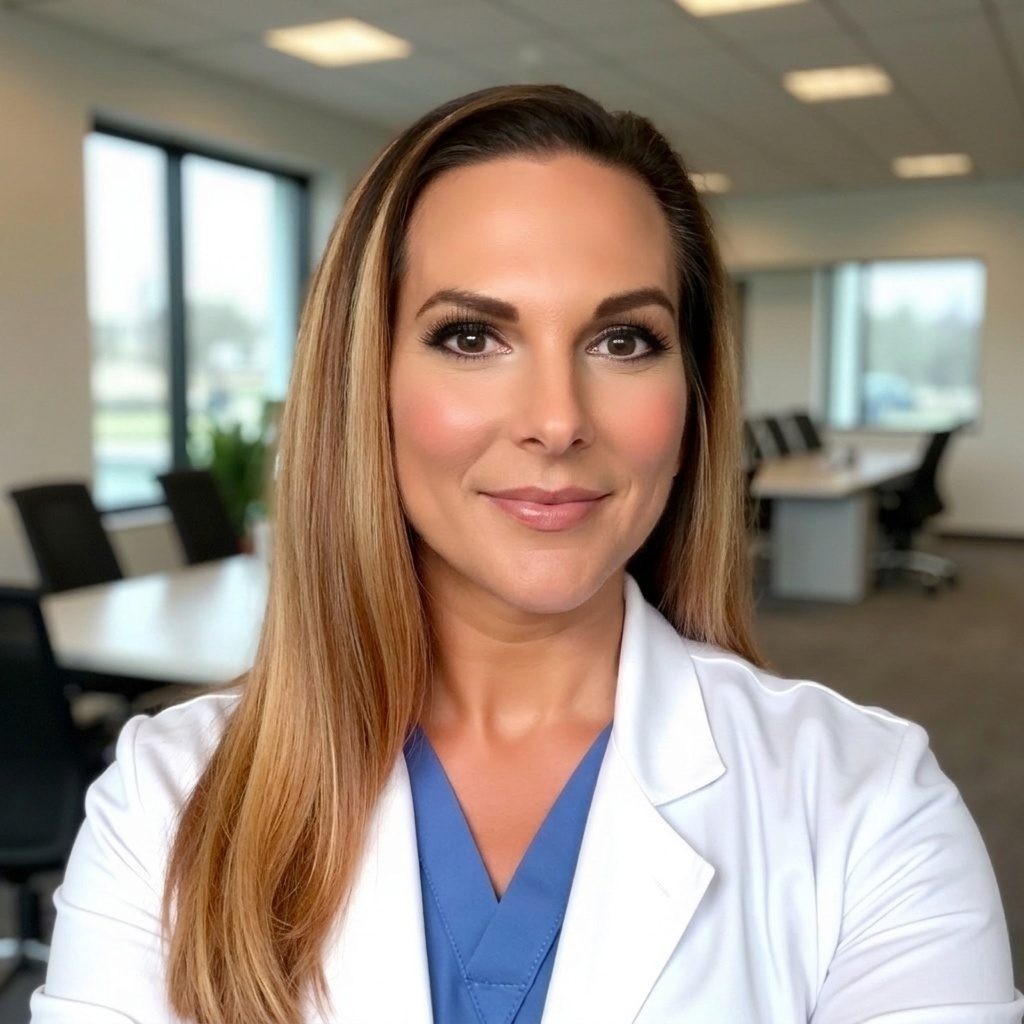
I started working in healthcare in 1999, long before I ever became a nurse. I’ve now spent 27+ years in this field — 17+ of them as a licensed RN — across long-term care, critical care, ICU stepdown, nurse management, health coaching, and Medicare patient advocacy. Nursing school taught me the textbook version of pain: the 0-10 scale, the medication protocols, the charting requirements. It didn’t teach me most of what I actually needed to know. That came from years at the bedside and, eventually, from becoming a patient myself.
Here’s what I’ve learned that no classroom ever covered.
Pain doesn’t always look like pain
Some of the most uncomfortable patients I’ve cared for didn’t look like it. They smiled at the nurses. They said “I’m fine” when asked. Chronic pain teaches people to mask it — to function despite it, because the alternative is falling behind at work, worrying their family, or simply being tired of talking about it. If you’ve ever felt like your pain isn’t taken seriously because you “don’t look sick,” you’re not imagining that gap. It’s real, and it’s common.
Being unheard is one of the most damaging parts of chronic pain
In my work as a Medicare patient health advocate, I’ve sat with people who were told, in one way or another, that their pain was normal, exaggerated, or simply something to manage on their own. Being dismissed doesn’t just feel bad — it delays care. People stop bringing things up. They stop asking questions. The single most helpful thing a provider can do is listen first and treat second.
Becoming the patient changes everything
Nothing taught me more about chronic pain than living with it myself. I have rheumatoid arthritis, and once I was the one describing symptoms instead of documenting them, I understood things I’d never fully appreciated — how exhausting it is to explain your pain over and over, how much emotional energy goes into “pushing through” a normal day, and how much it means when someone actually believes you the first time.
Healing takes more than a prescription
Every job I’ve held in healthcare — critical care, coaching, advocacy — pointed to the same conclusion: real progress usually requires more than medication alone. It requires education, a plan the person can actually follow, and someone checking in on how it’s going. That’s why health coaching is built into every session I provide — not as an add-on, but because pain care that stops at a prescription pad usually stops working, too.
Access is often the real barrier
So many people who could benefit from consistent pain care simply can’t get to it — because of mobility limitations, transportation, or the exhaustion of managing pain every day just to leave the house. That reality, more than any single clinical lesson, is what led me to build Watercrest Integrative Pain Solutions: a mobile, in-home, drug-free approach called Neurofunctional Pain Management (NFPM), using electroanalgesia and neuromodulation to help manage pain without adding another hard-to-reach appointment to someone’s week.
The takeaway
Twenty-seven years in healthcare taught me a lot of clinical skills. But the most important lessons were about listening, believing patients, and recognizing that pain is never just physical. If you’ve felt unheard about your own pain, that says something about the system — not about you.
What’s one thing about your pain you wish more people understood? I’d love to hear from you — reply in the comments or reach out through the contact page.
Watercrest Integrative Pain Solutions provides mobile, in-home, drug-free pain care for adults in the Greater Houston area. This content is for educational purposes only and is not a substitute for medical advice — always talk with your healthcare provider about your specific situation.
Leave a Reply