-

Living With Rheumatoid Arthritis: The Messy Middle, Not the Highlight Reel
Last week, I wrote about the clinical differences between osteoarthritis and rheumatoid arthritis. This week I want to get more personal, because I don’t just treat pain for a living — I live with rheumatoid arthritis (RA) myself. Most of what gets shared publicly about chronic illness is either the diagnosis moment or the “look how far I’ve come” moment. What usually gets left out is everything in between: the years of trial and error, the frustration, and the slow, unglamorous work of figuring out what actually helps. That’s the part I want to talk about today. The symptoms that… Learn More
-
Osteoarthritis vs. Rheumatoid Arthritis
“Arthritis” gets used as a catch-all term, but osteoarthritis (OA) and rheumatoid arthritis (RA) are genuinely different conditions with different causes — and mixing them up can lead to the wrong expectations about treatment. I live with rheumatoid arthritis myself, so this one is personal, but I also hear the confusion between the two constantly in my practice. Osteoarthritis: wear-and-tear on the joint Osteoarthritis is a mechanical condition — the cartilage that cushions your joints gradually breaks down over years of use, injury, or age-related wear. It typically develops slowly, tends to affect joints that bear weight or get heavy… Learn More
-
Neuromodulation Explained: Retraining an Overactive Nervous System
Last week, I explained why chronic pain signals sometimes misfire — a process called sensitization, where the nervous system becomes overly reactive and keeps sounding the alarm long after an injury has healed. That’s the exact problem neuromodulation is designed to address, and it’s the second of the two drug-free technologies I use in my Neurofunctional Pain Management (NFPM) practice. What neuromodulation actually is Neuromodulation is a technology that uses targeted electrical stimulation to help alter, treat, or reset abnormal neural activity in the nervous system. Rather than just blocking a pain signal in the moment, the goal is to… Learn More
-
Why Pain Signals Sometimes Misfire
A few weeks ago, I wrote about how pain travels through the nervous system — from an injury site, along the nerves, up to the brain. One question that comes up constantly in my work: if the injury healed months or years ago, why does it still hurt? The answer lies in something called sensitization, and understanding it explains a lot about why chronic pain doesn’t just “go away on its own.” The nervous system can get stuck in the “on” position Normally, pain signals ramp up when there’s damage and settle back down once healing happens. With chronic pain,… Learn More
-
What 27+ Years in Healthcare Taught Me
I started working in healthcare in 1999, long before I ever became a nurse. I’ve now spent 27+ years in this field — 17+ of them as a licensed RN — across long-term care, critical care, ICU stepdown, nurse management, health coaching, and Medicare patient advocacy. Nursing school taught me the textbook version of pain: the 0-10 scale, the medication protocols, the charting requirements. It didn’t teach me most of what I actually needed to know. That came from years at the bedside and, eventually, from becoming a patient myself. Here’s what I’ve learned that no classroom ever covered. Pain… Learn More
-
Electroanalgesia 101 — How High-Frequency Currents Interrupt Pain Signals
Last week, I walked through how pain actually travels through the nervous system — from the injury site, along the nerves, up to the brain. If you haven’t read that one yet, it’s worth starting there, because this week’s topic, electroanalgesia, only makes sense in that context. It’s one of the two drug-free technologies I use in my practice, and it works by intervening directly in that pathway. What electroanalgesia actually is Electroanalgesia is a non-invasive treatment that uses high-frequency electrical currents — 8,000+ Hz — applied through the skin to stimulate nerves and interrupt pain signals before they register… Learn More
-
How Pain Actually Travels – A Nurse’s Practical Guide to the Nervous System
Living with a chronic pain condition myself, and having spent 27+ years in healthcare — nearly 20 of them as a licensed RN — I’ve explained pain to a lot of patients over the years. But I’ve noticed something: most people have never actually been told how pain works. They know it hurts. They don’t know why it keeps hurting, or why it doesn’t always match the injury. So this week, let’s walk through it — no medical degree required. Pain starts as a signal, not a feeling Pain isn’t something that happens in the injured tissue itself. It starts… Learn More
-

Electroanalgesia — The Deep Tech of Pain Relief
In this video, I break down electroanalgesia — one of the two technologies behind Neurofunctional Pain Management. I explain how high-frequency electrical stimulation interrupts pain signals at the nerve level, why it’s not just “a fancy TENS machine,” and what a session actually feels like. Learn More
-
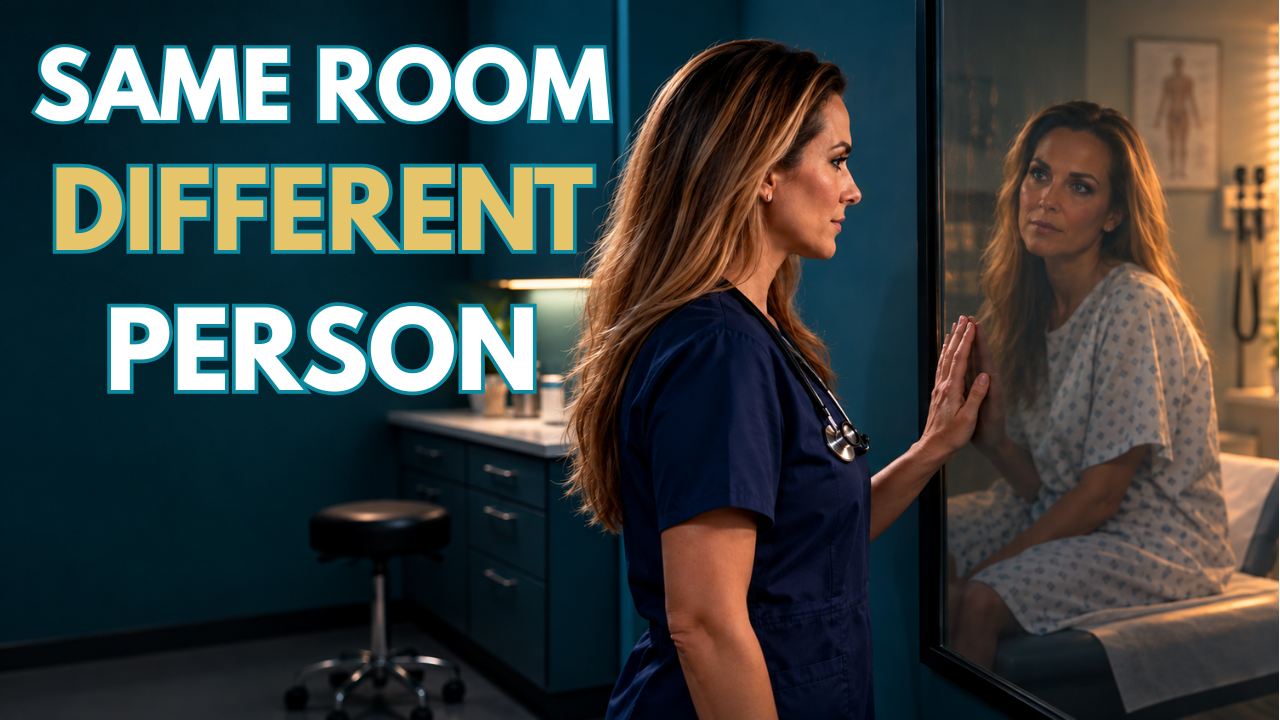
I’ve Been on Both Sides of the Exam Table — Here’s What I’ve Learned
In this video, I get more reflective than usual about what it means to have worn the white coat and the paper gown in the same healthcare system. I share what I understood about chronic pain clinically, what I didn’t truly understand until I was living with rheumatoid arthritis myself, and how being a patient has made me better as a clinician. Learn More

© 2026 Watercrest Integrative Pain Solutions. All rights reserved.