
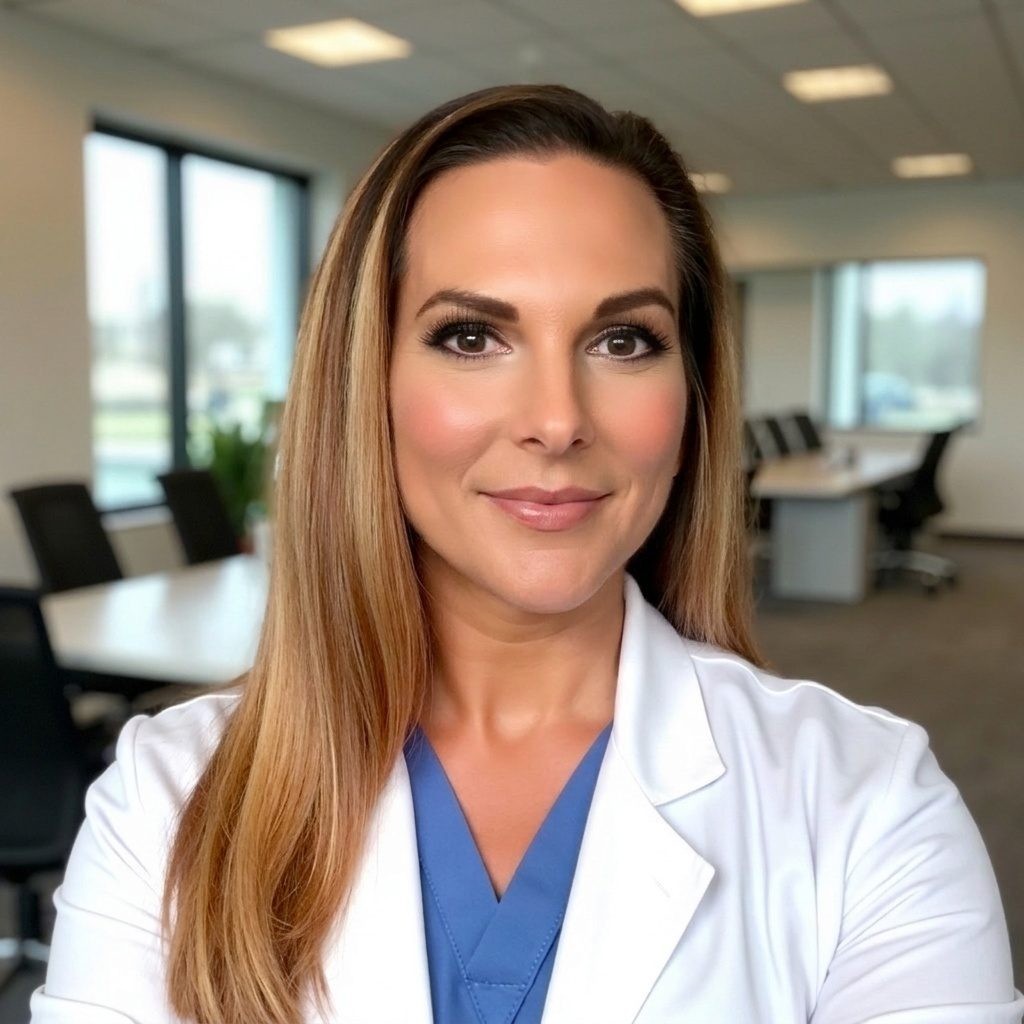
Author: Watercrest Admin

  • How Pain Actually Travels – A Nurse’s Practical Guide to the Nervous System

    How Pain Actually Travels – A Nurse’s Practical Guide to the Nervous System

    Living with a chronic pain condition myself, and having spent 27+ years in healthcare — nearly 20 of them as a licensed RN — I’ve explained pain to a lot of patients over the years. But I’ve noticed something: most people have never actually been told how pain works. They know it hurts. They don’t know why it keeps hurting, or why it doesn’t always match the injury. So this week, let’s walk through it — no medical degree required.

    Pain starts as a signal, not a feeling

    Pain isn’t something that happens in the injured tissue itself. It starts there, but the actual “hurt” you feel happens in your brain, after a signal has traveled a fairly long road to get there. Understanding that road is the key to understanding why some pain fades on its own, and why some pain sticks around long after it should have.

    The journey, step by step

    1. Sensors detect the problem. Specialized nerve endings called nociceptors sit throughout your skin, muscles, and joints. When there’s damage, pressure, heat, or inflammation, they fire off an electrical signal.
    2. The signal travels along nerves. That electrical impulse moves along peripheral nerves toward your spinal cord — think of these nerves as the wiring that carries the message.
    3. The spinal cord relays it upward. At the spinal cord, the signal gets passed to your brain through the central nervous system, sometimes getting amplified or modified along the way.
    4. The brain interprets it. Only once the signal reaches the brain does it actually become “pain” as you experience it — and the brain factors in things like stress, past experience, and fear, which is why pain can feel different depending on the circumstances.

    Why chronic pain doesn’t play by the same rules

    With acute pain — a sprained ankle, a paper cut — the signal does its job, you protect the area, it heals, and the signal stops. Chronic pain is different. Sometimes the nervous system stays switched on even after tissue has healed, continuing to send pain signals the body no longer needs. Other times, nerves themselves become damaged or irritated (this is what we mean by neuropathic pain) and start firing signals on their own. In both cases, the pain is real — it’s just that the “wiring” itself has become part of the problem, not just the messenger.

    Why this matters for treatment

    Once you understand pain as a signal traveling a pathway, it opens up more ways to treat it than medication alone. Some approaches work at the injury site. Some work on the nerves carrying the signal. Some work on the nervous system’s overall sensitivity.

    This is the idea behind Neurofunctional Pain Management (NFPM), the drug-free approach I use in my practice. It combines electroanalgesia — high-frequency electrical currents that interrupt pain signals along that pathway before they register as strongly in the brain — with neuromodulation, which works to calm an overactive nervous system at its source. Instead of only addressing pain after it’s already “arrived,” these approaches intervene earlier in the process.

    Next week, I’ll go deeper into electroanalgesia specifically — what it actually is, how it compares to a standard TENS unit, and what a session looks like.

    The takeaway

    Pain is a signal, not just a sensation — and signals can be interrupted, redirected, or calmed. If you’ve been told your pain “doesn’t make sense” or been left without an explanation for why it’s still there, understanding this pathway is often the first step toward finding an approach that actually addresses it.

    What part of this surprised you most? I’d love to hear from you — reply in the comments or reach out through the contact page.

    Watercrest Integrative Pain Solutions provides mobile, in-home, drug-free pain care for adults in the Greater Houston area. This content is for educational purposes only and is not a substitute for medical advice — always talk with your healthcare provider about your specific situation.


  • 5 Things People Get Wrong About Chronic Pain

    5 Things People Get Wrong About Chronic Pain

    September is Pain Awareness Month, and if there’s one thing I’ve learned in 27+ years in healthcare — nearly 20 of them as a licensed RN — it’s that most people living with chronic pain have been given a lot of bad information along the way. Not because anyone meant to mislead them, but because pain is complicated, and a lot of the common wisdom around it just hasn’t caught up.

    I’ve heard these myths from patients. I’ve believed a few of them myself, at different points. So this month, I want to clear up five of the ones I hear most often — because what you believe about your pain shapes what you’re willing to try to feel better.

    Myth #1: “Chronic pain is just a normal part of getting older.”

    It’s true that pain becomes more common as we age, but “common” doesn’t mean “something you’re supposed to accept.” Chronic pain — pain that lasts longer than three months — is a medical condition with real, identifiable causes, whether that’s nerve damage, joint degeneration, a past injury that never fully resolved, or a nervous system that’s stuck sending pain signals long after the original problem healed. Age can be a contributing factor, but it’s rarely the whole story, and it’s almost never a reason to stop looking for answers.

    Myth #2: “If medication hasn’t worked, there’s nothing left to try.”

    This is one of the most discouraging myths out there, and it’s simply not true. Medication is one tool for managing pain — not the only one. There are entire categories of treatment that work through completely different mechanisms, including drug-free approaches that target the nervous system directly.

    This is actually where my own practice comes in. I specialize in something called Neurofunctional Pain Management (NFPM), which uses two non-invasive technologies: electroanalgesia, which uses high-frequency electrical currents to interrupt pain signals before they reach the brain, and neuromodulation, which uses targeted stimulation to help calm an overactive nervous system. Neither involves medication, and neither is a replacement for the care you’re already receiving — they’re additional options worth knowing about if what you’ve tried so far hasn’t gotten you where you want to be.

    Myth #3: “Managing pain always means taking more medication.”

    Medication has an important place in pain care, and I’d never tell someone to stop something their provider has prescribed. But “managing pain” and “medicating pain” aren’t the same thing. Managing pain can also mean addressing how signals travel through the nervous system, improving mobility so the body moves the way it’s designed to, and building daily habits that reduce flare-ups. A well-rounded approach usually includes more than one piece.

    Myth #4: “Surgery is my only remaining option.”

    For some conditions, surgery is absolutely the right call — this isn’t an anti-surgery message. But I’ve sat with a lot of patients who were told surgery was their last resort when they hadn’t yet tried other paths. Before agreeing to a major procedure, it’s worth asking your provider what non-surgical options exist, what surgery will and won’t fix, and what recovery actually looks like. A drug-free, nervous-system-focused option like NFPM is often worth exploring as part of that conversation — not instead of good medical advice, but alongside it.

    Myth #5: “Getting real help for pain means more appointments, more waiting rooms, and more exhaustion.”

    This one is personal for me. So many of the people who could benefit most from consistent pain care are the ones who struggle hardest to get to it — because of mobility limits, transportation, or the sheer exhaustion that comes with living in pain every day. That’s the exact problem Watercrest was built to solve. Care comes to you, in your home, so getting help doesn’t require the very thing pain makes difficult.

    The takeaway

    Chronic pain is real, it’s common, and it deserves more than “learn to live with it.” If any of these myths sound familiar, it might be worth asking your provider one new question at your next visit — or reaching out to explore whether a drug-free approach like NFPM has a place in your care.

    Which of these myths have you heard before? I’d love to hear from you — reply in the comments or reach out through the contact page.

    Watercrest Integrative Pain Solutions provides mobile, in-home, drug-free pain care for adults in the Greater Houston area. This content is for educational purposes only and is not a substitute for medical advice — always talk with your healthcare provider about your specific situation.