
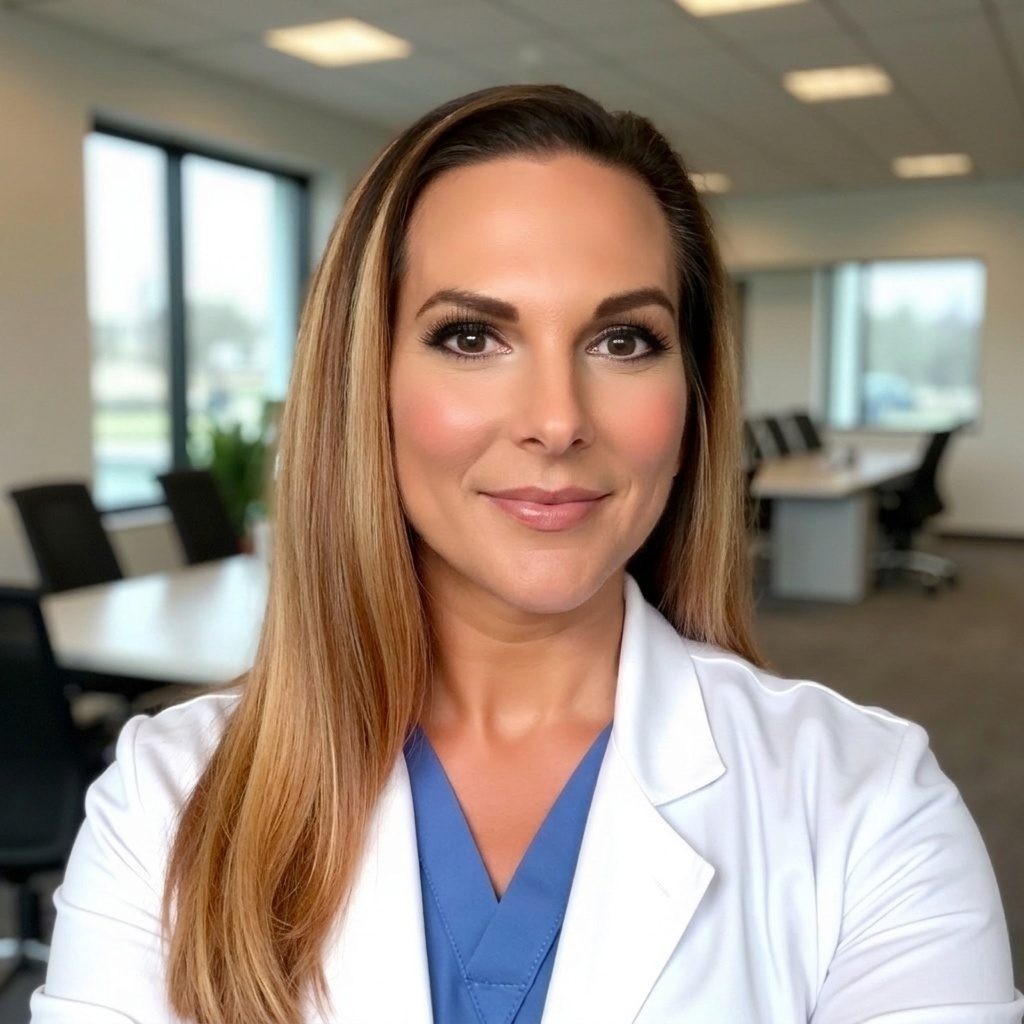
Last week, I wrote about the clinical differences between osteoarthritis and rheumatoid arthritis. This week I want to get more personal, because I don’t just treat pain for a living — I live with rheumatoid arthritis (RA) myself. Most of what gets shared publicly about chronic illness is either the diagnosis moment or the “look how far I’ve come” moment. What usually gets left out is everything in between: the years of trial and error, the frustration, and the slow, unglamorous work of figuring out what actually helps. That’s the part I want to talk about today.
The symptoms that didn’t add up at first
Like a lot of people with RA, my early symptoms didn’t scream “autoimmune disease.” Joint stiffness that lingered well past the usual “I just need to move around” window. Fatigue that didn’t match how much I was sleeping. Swelling that came and went. As a nurse, I’d spent years recognizing these exact patterns in patients — and I still second-guessed what was happening in my own body for longer than I’d like to admit. That’s how easy it is to dismiss your own symptoms, even when you know better professionally.
Getting the diagnosis didn’t mean getting easy answers
Once RA was confirmed, I expected a clear roadmap. What I got instead was a process of trial and error with disease-modifying treatment — medications aimed at slowing the immune system’s attack on the joints. Finding the right one, and the right dose, took time, and along the way there were side effects that were their own kind of exhausting to manage. This is normal for RA treatment, but nobody really prepares you for how much patience it requires, or how discouraging it feels when something that’s supposed to help ends up creating a new problem to solve.
The flare cycle nobody warns you about
One of the hardest parts of RA to explain to people who don’t have it is the unpredictability. Some days, I feel functional and capable. Other days — sometimes with no clear trigger — my joints are stiff, swollen, and painful enough that simple tasks take real effort. Learning to plan around a condition that doesn’t follow a predictable schedule has been its own adjustment, both practically and emotionally. I’ve had to get comfortable with the idea that “good days” and “bad days” aren’t a reflection of how hard I’m trying.
Where drug-free pain management entered the picture
Disease-modifying treatment addresses the underlying autoimmune process, but it doesn’t always fully resolve the day-to-day pain — and I didn’t want to keep adding more medication on top of what I was already managing just to control the pain itself. That’s what eventually led me toward electroanalgesia and neuromodulation, the two technologies now at the core of my practice. Using them alongside my existing medical care — never as a replacement for it — gave me another tool for managing pain and stiffness without asking my body to process more medication.
I want to be honest here: this isn’t a miracle story. RA hasn’t gone away, and it’s not going to. What’s changed is that I have more tools now, and more days where the pain is manageable enough that it doesn’t run the whole show. That’s a meaningful difference, even if it isn’t the dramatic “transformation” story people sometimes expect.
What I’d tell someone newly diagnosed
If I could go back and tell myself something in those first uncertain months, it would be this: give yourself permission to take the process seriously without expecting it to be fast. Track your symptoms so you can speak to patterns, not just how you feel on any given day. Ask questions, more than once if you need to. And don’t assume that because a treatment plan takes time to dial in, it isn’t working — sometimes it just hasn’t found its shape yet.
The takeaway
Chronic illness rarely looks like the highlight reel version people share. It looks like adjustment, patience, and building a toolkit over time rather than finding one fix that solves everything. If you’re in your own messy middle right now, I want you to know that’s a completely normal place to be — and it doesn’t mean you’re doing anything wrong.
If you’re living with RA or another autoimmune condition, what’s one thing you wish people understood about it? I’d love to hear from you — reply in the comments or reach out through the contact page.
Watercrest Integrative Pain Solutions provides mobile, in-home, drug-free pain care for adults in the Greater Houston area. This content is for educational purposes only and is not a substitute for medical advice — always talk with your healthcare provider about your specific situation.